
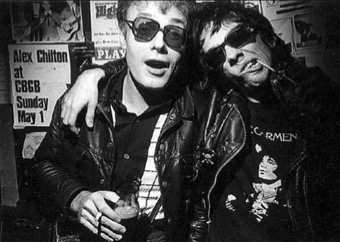
Joe Stevens
I first met Joe Stevens in 2006 at Caffe Kilim in Portsmouth, New Hampshire, back when it was still on Daniel Street. He’d sit across from me with a coffee and, with that unmistakable blend of Brooklyn swagger and British punk attitude, regale me with stories that spanned the 1960s, 70s, and 80s.
At the time, I was producing branded entertainment projects like Hottest Mom in America and How Sweet the Sound for Verizon. My days were filled with big brands, celebrity tie-ins, and finding new formats. But Joe’s excitement — his sheer energy when talking about photography — began to spark something in me. He had this belief that one day, camera phones would surpass even the largest cameras in quality.
In 2007, when the iPhone was released, his words came rushing back. I started thinking about how photography itself was on the brink of a massive cultural shift. That realization inspired me to develop a project that would tap into that democratization of imagery: a competition show to find America’s best amateur photographer. I called it FLASH.
FLASH was never produced, but the trailer captures the spirit of what Joe had set in motion within me. It was about giving everyday people the chance to show their eye, their creativity, their voice — ideas Joe and I had talked about over coffee long before.
Joe wasn’t part of the original vision for FLASH, but once the concept was in motion, I knew I wanted him involved. We signed him on as a judge, not just because of his iconic portfolio, but because he carried history with him in every story, every photograph. And separately, I optioned his life rights for several years, recognizing that his own story was as cinematic as any rock documentary could hope to be.
Over the years, I collected many of Joe’s pieces — some I kept for myself, others I gave as gifts. Each print was more than an image; it was a piece of living history, charged with the same energy I had felt in his presence.
But what fascinated me even more than his photography were two chapters of his life that seemed almost larger than life: his arrest in 1971 in Belfast for arson while working as a reporter (detailed here), and his role as photographer for Wynn Chamberlain’s underground film Brand X in the late 60’s. Both episodes underscored Joe’s knack for finding himself in the middle of chaos, and his determination to chronicle it.
Joe Stevens talking about the Paul McCartney Tour in a voicemail
Hearing Joe in his own words brings back the essence of who he was. His voicemails weren’t just messages — they were extensions of his storytelling, filled with passion for the pieces he had captured and preserved.
Joe Stevens passed away on August 26, 2025, at the age of 87. His photographs of David Bowie, the Sex Pistols, Debbie Harry, Paul McCartney, and so many others will live on as cultural touchstones. But for me, his legacy is far more personal.
He wasn’t the creator of FLASH — but he was the spark that lit it. He reminded me that stories can be told through an image, through a voice, or through the very way you live your life. And in the end, that spark changed the trajectory of my own storytelling forever.